
SIP + SIP Feature
Boisset Collection
The World According to Jean-Charles Boisset
WRITTEN BY Fran Miller
|
Published On: May 11, 2026

Art & Clarity Photography
Oh, to live the life of Jean-Charles Boisset.
The French-born vintner carries himself with a sense of theatrical ease and a joie de vivre that doesn’t feel rehearsed so much as instinctive. He is, undeniably, a bon vivant. Yet to dismiss Boisset as merely indulgent would miss the point entirely. Beneath the velvet, crystal, and couture is a disciplined steward of land, legacy, and experience, and someone who understands that luxury, at its best, is never just about excess. It’s about intention.
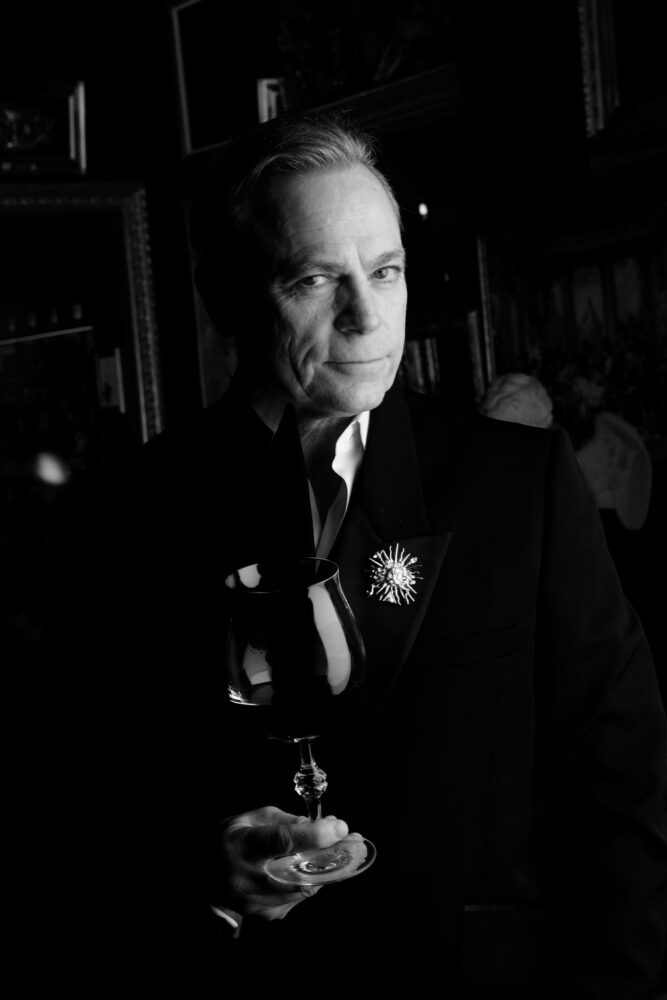 For more than two decades, Boisset has been shaping Napa Valley not only through wine, but through how people engage with it. His vision has always been immersive. Wine is the anchor, but it’s also the invitation, into history, into craftsmanship, into beauty, and increasingly, into a way of life that stretches well beyond the glass.
“In today’s world environment where tension and difficulties between nations and cultures keep arising,” he says, “it seems more opportune to bring a bottle of wine in the middle of the table and bring people together. Wine is a true connector, because it brings history, heritage, civilization, culture, food, art, architecture — all of it together. At the table.”
Today, that vision is crystallizing across Napa in new and unexpected ways: through JCB St. Helena, the revival and reimagining of Flora Springs, and the debut of Napa Fragrance, a sensory offshoot that feels both surprising and entirely on brand. Each project reflects a different facet of Boisset’s creative identity. Together, they offer a revealing portrait of where Napa’s most flamboyant thinker is headed next.
A Life Informed by Heritage
Boisset’s story begins, as so many wine stories do, in Burgundy. Raised among vineyards in Vougeot, he grew up inside a family where farming wasn’t romanticized, it was respected. That grounding remains central to his worldview.
“We feel the stewardship of the land, of the vineyards,” he says. “The key is to obtain from the soil and from Mother Nature the very best, and to convert those beautiful fruits into the ultimate quality of wine.”
Long before organic and biodynamic practices became industry talking points, Boisset was advocating for them as a matter of responsibility and not trend. Today, through the global Boisset Collection, his portfolio spans continents, yet his philosophy remains rooted in the earth.
He arrived in California in the early 2000s with ambition and curiosity in equal measure. Since then, his footprint has expanded across Napa and Sonoma, anchored by estates such as DeLoach Vineyards, Raymond Vineyards and Buena Vista Winery, and supported by a philosophy he calls viniculteur — a belief that winemaking begins in the soil and ends in the story. But Boisset has never confined himself to a single lane. Wine, for him, is a starting point. Culture is the destination.
He speaks of Napa Valley with both reverence and optimism. With roughly 47,000 planted acres, the region remains finite, and he views its current recalibration toward quality over quantity as healthy. “Napa Valley is meant to produce the best,” he says, invoking Burgundy and Bordeaux in the same breath. “Not quantitatively, but qualitatively. Balance, equilibrium, elegance, finesse, power — with great respect for what the vineyard has to offer.”
JCB St. Helena: A Salon, Not a Tasting Room
If there is a physical space that best captures Jean-Charles Boisset’s worldview today, it is JCB St. Helena. This is not a tasting room in the traditional sense. It is a salon, a place designed for conversation, provocation, and delight.
“A salon is to share romance, history, literature, conversation, poetry, art, and to meet others in a very safe place,” he explains. “Even if you come by yourself, you are going to meet someone. That is the ultimate objective.”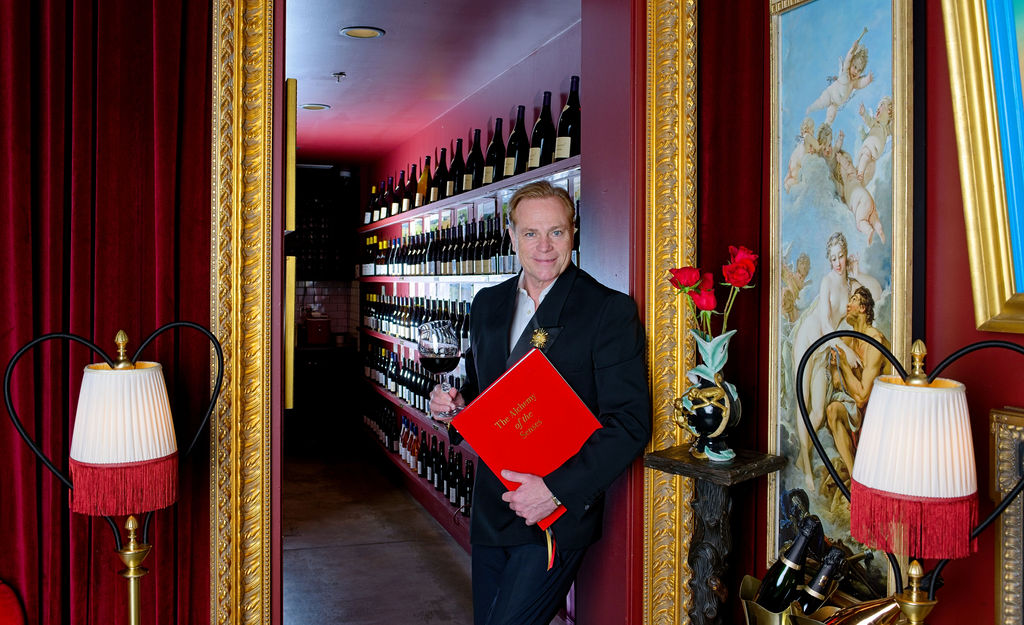
The space blends French elegance with a Napa vibe offering an experience that’s curated rather than constructed. Guests sit slightly lower than expected, surrounded by art drawn from Jean-Charles’ favorite museums. There is warm light, crystal, and layered textures. The effect is transportive. “You want the association of France and Paris and history blended with artistry,” he says. “To be inspired by what you see, what you feel, what you taste.”
Design elements lean expressive. Wine is presented as both craft and character. The atmosphere invites curiosity rather than reverence. It’s a subtle but important distinction in this valley that can sometimes take itself too seriously.
JCB St. Helena also signals something else: Boisset’s belief in Main Street Napa Valley. While others might find exclusivity through remoteness, he continues to invest in places where locals and visitors intersect. It’s a reminder that luxury doesn’t require isolation; it requires thoughtfulness.
Flora Springs: A Legacy Reclaimed
The acquisition of Flora Springs marks a pivotal moment, not just for Boisset, but for Napa Valley. Founded in 1978 in St. Helena and Rutherford, Flora Springs carries deep historical weight. In 1993, its Insignia appeared on the cover of Wine Spectator alongside Opus One — a signal of its place among Napa’s elite.
For Boisset and his wife, Gina Gallo Boisset, stewardship defines this chapter. “It is an incredible legacy to continue and to build for the future,” he says. “Flora represents the goddess of nature, the goddess of spring, the transformation and renaissance.”
The mythology resonates. References to Botticelli’s Primavera and The Birth of Venus inform the aesthetic language, but the winemaking focus is grounded: balance, controlled alcohol, wines meant to be enjoyed with or without food. Trilogy and Soliloquy remain benchmarks, priced for approachability. “A strong, consistent price-quality ratio,” he emphasizes, “is essential to what Napa should represent.”
Innovation finds its place as well. At the downtown Napa tasting room, wine-based cocktails — personally designed by Jean-Charles — have drawn enthusiastic response. “People want diversity,” he says. “Using wine as a base to enjoy life at large.”
Napa Fragrance: Extending the Senses
Then there is Napa Fragrance, perhaps the most revealing of Boisset’s current ventures. Now open in downtown Napa, the boutique introduces clean, finely crafted fragrances designed to evoke specific Napa sub-appellations — Napa Valley, Yountville, St. Helena, Oakville, Rutherford, Calistoga.
“With fragrance, you transcend through molecules,” he explains. “The heart notes, the head notes, the base notes. Wine has aroma, certainly, but fragrance allows you to escape into the pure emotion of smell.”
Each scent pairs symbolic elements: Napa Valley expressed through rose and musk; St. Helena through fig tree and soil. In a nod to wellness alongside artistry, the formulations are paraffin-free, paraben-free, phthalate-free, built from soy and coconut. Candles, room sprays, and soaps extend terroir beyond the bottle. It is a bold move, yet entirely consistent. For Boisset, wine has always been part of a broader sensory narrative. Fragrance simply isolates and magnifies one dimension of it.
 Beyond the Persona
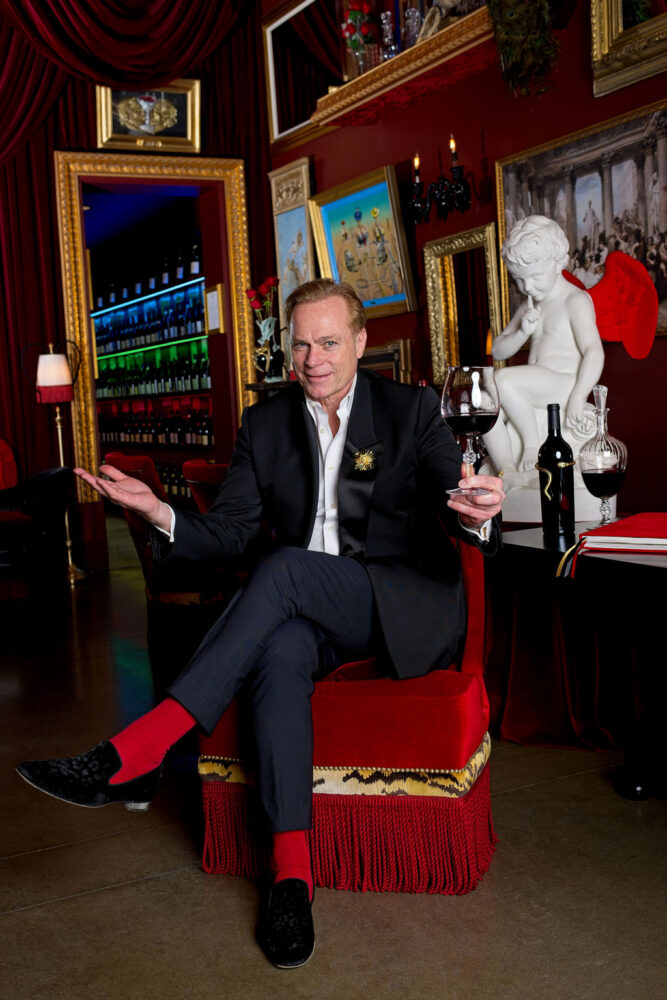

Jean-Charles Boisset is often described in superlatives: charismatic, extravagant, theatrical. And yes, there is flair. But what’s easy to overlook is the discipline beneath the flourish. Every collaboration, every space, every label is anchored in quality. “I’ve never been so energized,” he says of Napa’s present moment. “The readjustment of a region is always healthy. I’m very optimistic.”
In the Napa Valley, Boisset stands as both preservationist and provocateur. His work suggests that the future of wine culture isn’t narrower; it’s broader. What makes him so unique is not that he unabashedly enjoys beauty; it’s that he insists on sharing it. Perhaps that is his greatest contribution of all.