
home featured
The Bohemian Highway in
Sonoma County Lives On
Sonoma County Lives On
Wine, Art, and Hippie Vibes
WRITTEN BY Layne Randolph
|
Published On: November 24, 2025


For those searching for a short, scenic drive in a less-traveled part of Sonoma County, consider the Bohemian Highway—ten miles of two-lane road linking Freestone, Occidental, and Monte Rio through redwoods, pastures, and pockets of vineyards.
The Bohemian Highway, once an enclave for artists and musicians, connects these towns, each with its own unique style of laid-back creativity, small-town charm, and nature escapes. The road’s name also has a local anchor: Monte Rio’s Bohemian Grove, the private redwood retreat of San Francisco’s Bohemian Club since the late 1800s.
It’s an easy drive to do fast, but a better one to do slow. Pull over for bread, a farmstand, or a tasting room. Walk a minute under the redwoods, then get back in, put the windows down, and keep following the curve of the road until the light shifts and the blue sky opens.
Start at the southernmost town, Freestone, to stroll through front-porch shops, travel to Occidental for its artisan flair, drive through forested bends, and then finish in Monte Rio, where the pavement meets the Russian River for a playtime experience. If you’re coast-bound, State Route 116 picks up the river’s line and carries it to Jenner and the Pacific.
For those who haven’t experienced it yet, traveling the ten miles of twisting roads on the Bohemian Highway offers a unique blend of scenic beauty and local charm.

Osmosis Day Spa in Freestone // Photo by Trinette Reed Photography courtesy of Sonoma County Tourism
Freestone (population 32): Where the Journey Begins
Freestone is tiny, yet it was named Sonoma County’s first designated historic district in 1974. With its short main street of 19th-century buildings situated at the southern end of the Bohemian Highway, it allows visitors to park once and cover the essentials on foot.
Freestone isn’t just cute; it’s also a gateway to one of California’s newest appellations. In 2022, the federal government approved the West Sonoma Coast AVA to distinguish this fog-soaked, ocean-cooled pocket of terroir from the much larger, more varied “Sonoma Coast.” That fog and marine airflow are why Pinot Noir and Chardonnay succeed here: slower ripening, bright acidity, detailed aromas.
To taste some of the Sonoma Coast goodness, try Black Kite Cellars’ Jasper House. Named for the black kite bird that can be seen flying overhead in the region, the winery specializes in cool-climate Pinot Noir and Chardonnay from coastal sites. It’s a cult favorite winery for a reason—its premium, distinctive, small-lot Pinot Noir.
For food, Wild Flour Bread bakery is a must-stop. When you pass by, the first clue that something amazing is happening here is the line to get in. On any given day, it snakes along the porch out to the road, and the smell of baking bread keeps everyone in place. People drive from miles around to experience Wild Flour; it’s the type of place you don’t forget, and because it’s mainly known only to Sonoma County locals—the lucky ones—it feels like a secret pleasure.
Next door to the bakery scene, BlueGoat is a compact market specializing in local cheese, wine, and provisions, making it an ideal spot to build a picnic.
If your idea of relaxation involves heat, Osmosis Day Spa Sanctuary is three minutes up the road. It’s the only U.S. spa offering a cedar enzyme bath—a Japanese fermentation treatment that’s part science experiment, part relaxation.
Practical tips to make the day work: Wild Flour is open Fri–Mon and does sell out; lines move quickly. Black Kite’s Jasper House is appointment-only, so book ahead. BlueGoat is an efficient picnic stop and a good place to ask about what’s local that week. Osmosis requires reservations.
From Freestone, the Bohemian Highway bends north into the forest. This is slow wine country; it’s laid back and quiet—no limousines, no bridal parties—just in-the-know wine lovers enjoying the day.
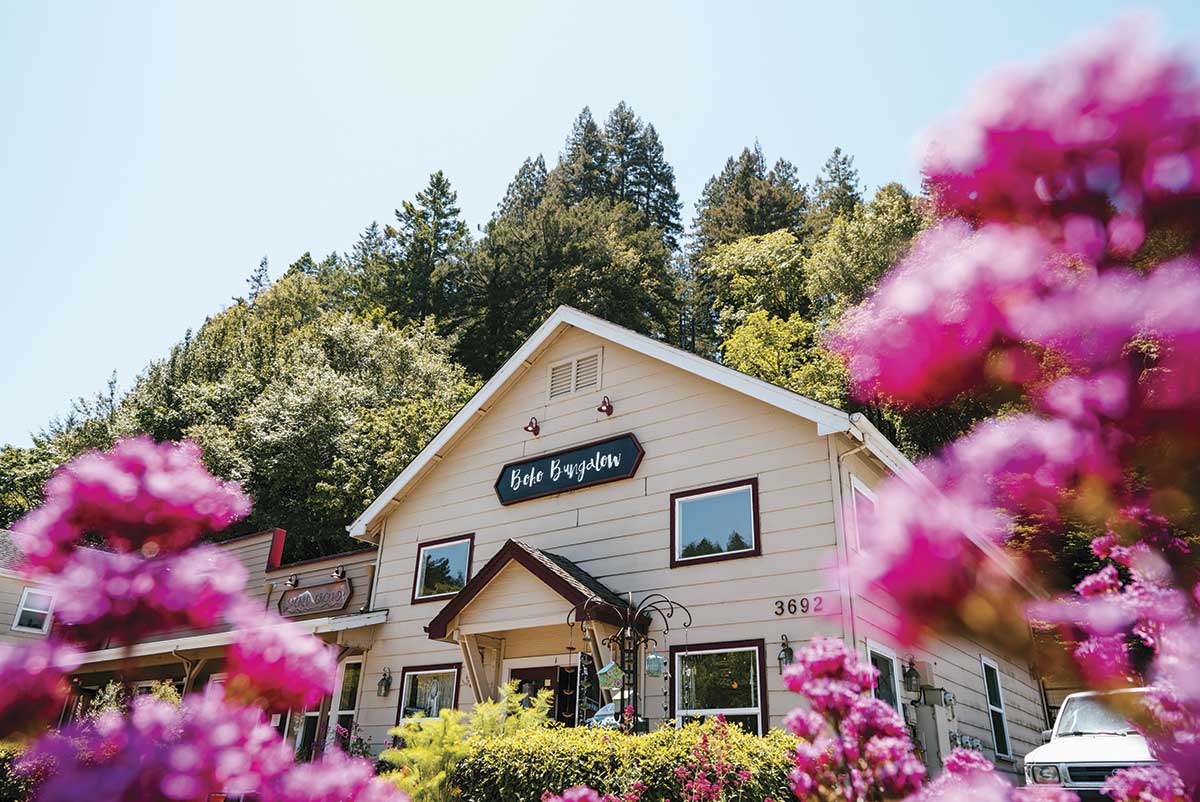
Boho Bungalow in Occidental in Sonoma County // Photo by Mariah Harkey courtesy of Sonoma County Tourism
Occidental (population 1,132): Wine, Art & Picnic Stops
From Freestone, the Bohemian Highway twists north, traveling in and out under redwood canopies along the way. Stop for lunch at Occidental Community Park, an unfussy picnic ground beneath oak and bay laurel. Unpack your Wild Flour bread and BlueGoat cheeses, slice into local charcuterie from Bohemian Market, and pour what’s left of that Black Kite Pinot Noir (responsibly, of course). It’s the kind of lunch that doesn’t need a tablecloth or menu.
Walk through Occidental today, and you’ll get a glimpse of what it once was—the galleries and performance halls represent a quiet refusal to let commercial gloss smooth the town’s edges.
Occidental is an artist’s town. If you’re feeling curious, pop into the Occidental Center for the Arts. This small-town gallery hosts exhibits, poetry readings, and occasional live sets by local musicians.
Boho shops spill pottery and woven baskets onto porches; murals peek out from alley walls. At Bohemian Bungalow, you can browse hand-carved cutting boards and glass jewelry made by local artisans.
Then there’s Hazel, the most lauded restaurant in the area. The menu changes with the seasons, with choices like roasted local carrots tossed with tahini or blistered pizzas cooked in the wood-fired oven. Pro tip: ask for whatever pairs best with Sonoma Coast Pinot Noir. Sit on the patio if you can, and watch as locals and travelers drift past.
Two historic Italian institutions face each other. The Union Hotel has been serving since 1879; Negri’s dates back to 1943 and now offers a more intimate, bar-centric service on weekends. You don’t come for flash—you come for red-sauce comfort and nostalgia.
If you’d rather walk before dinner, head to LandPaths’ Grove of Old Trees, a pocket of old-growth redwoods just outside town. The loop is short and quiet; parking is limited, so be respectful. It’s the simplest way to feel what the coast range does to your pulse. The Grove of Old Trees lot is tiny—go early or off-peak.
Before you leave Occidental, taste again—this time at Marimar Estate, just a short detour off the main road. Marimar Torres’ Spanish heritage is evident in the Albariño, which is as bright as sea spray, and in Pinot Noirs that have a distinctly coastal feel. On a good day, she’s there herself, talking about organic farming and laughing about Sonoma’s slow rhythm.
The final stretch of the Bohemian Highway dips back into the forest before opening onto the Russian River at Monte Rio. Here, the vibe softens even further.
For adventurers, try Sonoma Canopy Tours’ Tree Tops Course, offering breathtaking views of the majestic redwood forest from above.
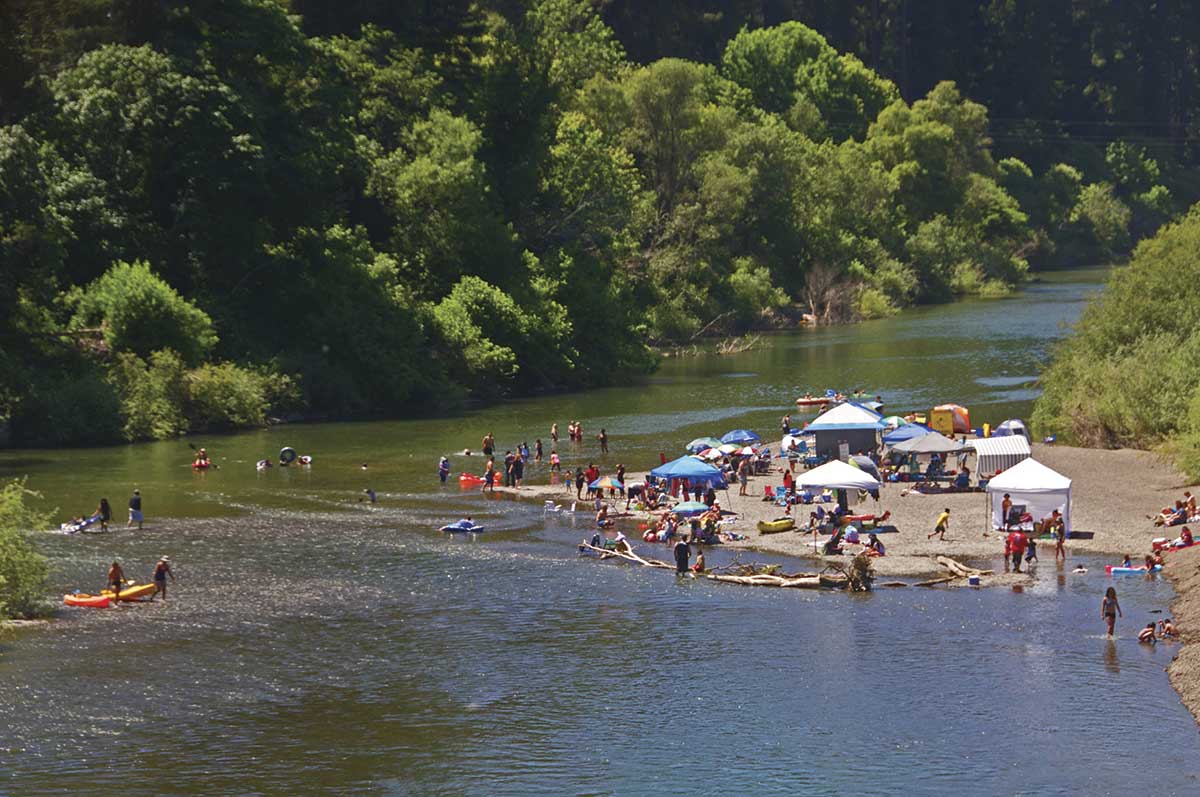
Monte Rio Community Beach // Photo courtesy of Sonoma County Tourism
Monte Rio (population 1,080): Where the River Meets the Sea
Keep rolling and the road drops you at Monte Rio, where the Russian River widens. Monte Rio Community Beach is the largest public beach on the lower river; in summer, you’ll find kayak rentals, shady spots, and enough space for families to spread out. Kids splash in the shallows while kayakers glide past old wooden boathouses. Charlie Musselwhite, the iconic blues harmonica player, once said he could “hear blues in the water” here, and you’ll believe him when you sit on the sand, wine glass in hand, watching the sunlight dappling through the trees.
Golfers get an extra treat in Monte Rio: Northwood Golf Club, a nine-hole course designed in 1928 with Alister MacKenzie’s fingerprints on it, carved through second-growth redwoods. It’s casual, affordable, and very Sonoma—no pretense, just golf under trees surrounded by forest.
If you’re coast-bound after the river, Highway 116 follows the water to tiny seaside Jenner and the Pacific. That connection, and the morning fog pushing up from the ocean, are why these valleys read “cool climate” even in high summer. It’s the defining feature of Russian River and West Sonoma Coast fruit alike.
If the ocean is calling, keep driving west; follow the Russian River to where it flows into the Pacific Ocean. In the vast open expanse of sky and sea, hike the cliffs where the Pacific crashes against the rocks below.
Why This Road Feels Different
While California boasts many wine roads, the Bohemian Highway stands out for its unpolished, soulful charm, offering a distinct experience compared to the polished Napa or foodie-chic Healdsburg. The wine is excellent—cool-climate Pinot, minerally Chardonnay—but it’s also inseparable from the setting. You taste salt air in the glass, smell forest floor in the barrel room. Even the bread, cheese, and charcuterie carry the stamp of this land.
Artists came here for that exact authenticity. In a world of curated experiences, the Bohemian Highway remains wonderfully uncurated. Zoom out, and the Bohemian Highway is defined by scale and pace: short distances, modest storefronts, quiet roads, and cool-climate wines that favor nuance over power. Eat, taste, walk, repeat. Then drive the last few miles to the ocean with the windows down.