
SIP
Oakville
The Epicenter of Napa Valley’s Cabernet Culture
WRITTEN BY Melissa Vogt
|
Published On: August 19, 2025

Pictured Above: Heitz Martha’s Vineyard, courtesy of Heitz Cellar
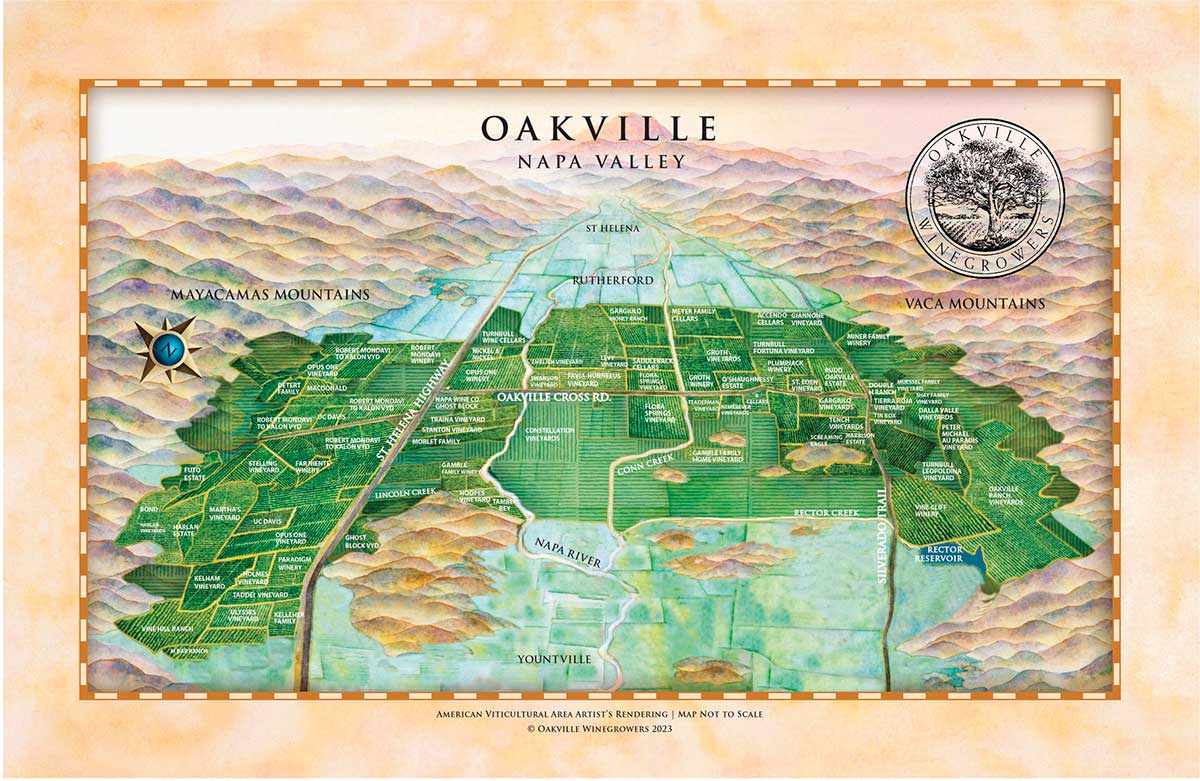
Few places in Napa Valley evoke the same reverence as Oakville. This narrow, sun-drenched corridor between the Mayacamas and Vaca Mountains has become synonymous with Napa’s finest Cabernet Sauvignon—deeply structured wines that marry power with poise. Home to generational estates, pioneering winemakers, and some of the most coveted vineyards in the world, Oakville is the epicenter of Napa Valley’s Cabernet culture.
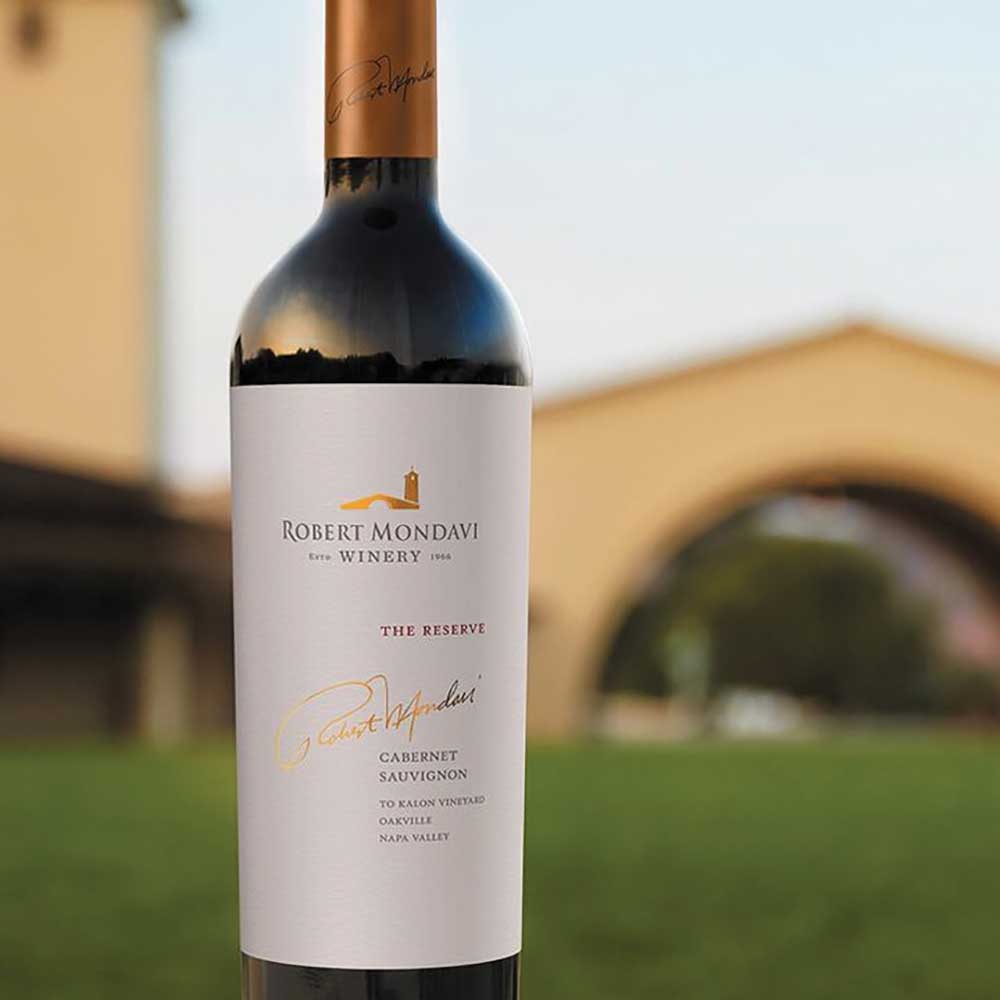
Robert Mondavi To Kalon Wine courtesy of Robert Mondavi Winery
Where Legacy Took Root
Oakville’s viticultural story began in the mid-1800s, when H.W. Crabb planted To Kalon—arguably one of Napa Valley’s most famous vineyard sites. His efforts laid the groundwork for a flourishing wine community that was nearly wiped out by Prohibition. But in the decades that followed, visionaries like Robert Mondavi resurrected Oakville’s potential. When the Oakville AVA was officially recognized in 1993, it merely confirmed what winemakers and collectors already knew: this was sacred ground for Cabernet Sauvignon.
Heitz Cellar was one of the early believers in the Oakville AVA. “Heitz Cellar has been working with Oakville fruit, namely Martha’s Vineyard, since 1965 and produced the first single vineyard wine in Napa Valley from this historic vineyard in 1966,” says Brittany Sherwood, Director of Winemaking at Heitz Cellar. “It was abundantly clear to Joe Heitz in the 1960s that this vineyard was producing something extraordinary.”
The AVA’s prestige grew with the rise of modern Napa Valley. Groth Vineyards & Winery earned Napa’s first 100-point score for an Oakville-grown Cabernet Sauvignon, and estates like Silver Oak and Far Niente earned critical acclaim. As time went on, Robert Mondavi’s collaborations with international legends and Far Niente’s restoration of a historic 19th-century winery only deepened the region’s influence. Today, Oakville is home to over 70 vineyards and some of the most recognized names in the world of fine wine.
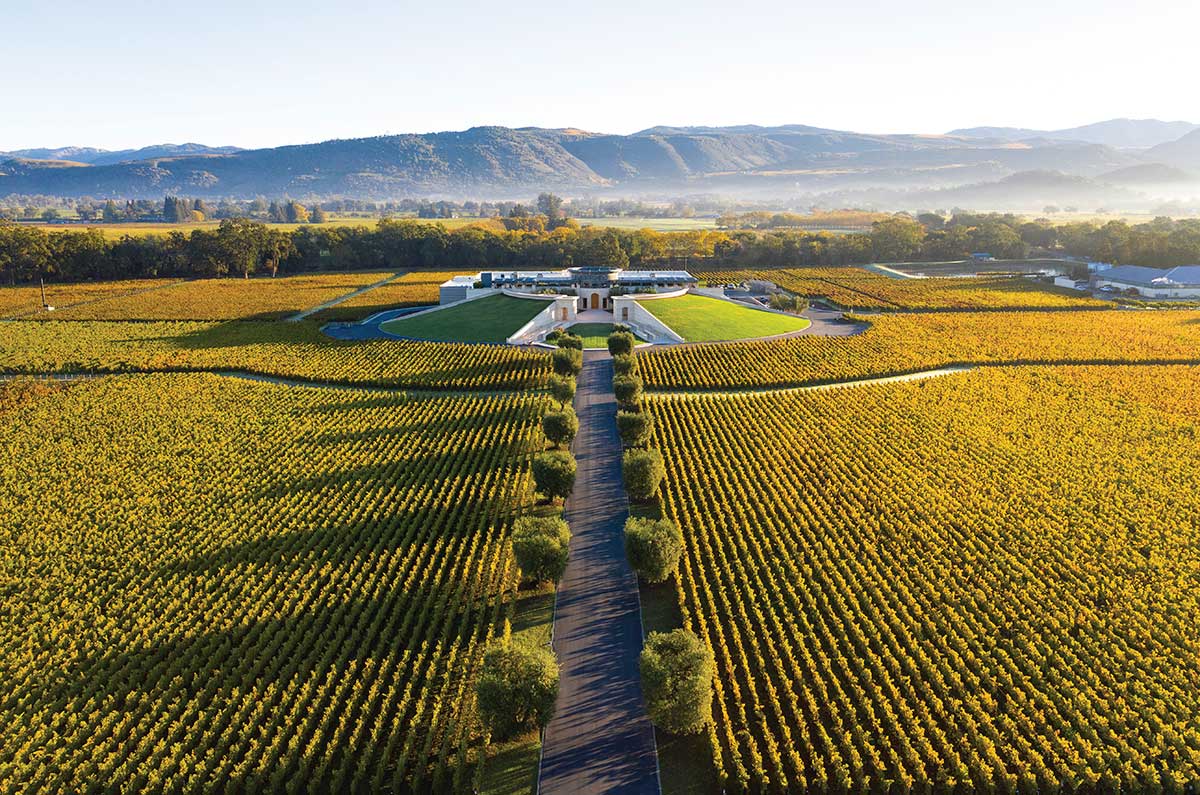
Photo courtesy of Opus One
A Land Between Two Ranges
Within the Oakville AVA borders lies a confluence of climate and soil that is nothing short of extraordinary. Situated in the center of Napa Valley, Oakville enjoys long, warm days balanced by cool marine air that drifts inland from the San Pablo Bay each afternoon. This diurnal shift allows grapes—especially Cabernet Sauvignon—to ripen fully while retaining critical acidity.
The soils are equally dynamic. “Opus One’s vineyards stretch across a sequence of alluvial fans that emerge from the western foothills and sweep northeast toward the Napa River,” explained Silacci, Winemaker at Opus One. “As the terrain descends, gravel content decreases, giving way to increasing amounts of clay, sand, and silt.” This variance of soil allows
for wines with both plush texture and firm structure.
At the western edge of the AVA lies Martha’s Vineyard, the site of one of Oakville’s most iconic expressions. “Martha’s Vineyard is located on the western side of Oakville at the base of the Mayacamas Range. It has the benefit of both healthy, fertile soils, with great natural drainage,” said Macy Stubstad, Director of Vineyard Operations for Lawrence Wine Estates, the larger portfolio brand under which Heitz Cellar operates. “The fruit benefits from gentle morning light as it faces the eastern Vaca ridge in Napa, and has the afternoon protection of the Mayacamas, allowing the fruit to retain its freshness and natural acidity through maturation.”
These variations in elevation, drainage, and composition provide winemakers with a diverse palette to work, resulting in wines that are as nuanced as they are powerful. “The subtleties of the appellation from north to south and from east to west paint a rich diversity in the wines over time,” Silacci says. It’s this sense of place that continues to define Oakville wines. From the velvety textures of Far Niente’s estate-grown Cabernet to the age-worthy structure of Heitz’s Martha’s Vineyard bottling, terroir speaks in every glass.
 Varietals & Winemaking in Oakville

Cabernet Sauvignon is undoubtedly the king of Oakville, but it doesn’t rule alone. Merlot, Cabernet Franc, Petit Verdot, and Malbec frequently play supporting roles, while Sauvignon Blanc and Chardonnay are coveted white wine offerings. Winemaking leans toward restrained power, favoring elegance over excess. Whether aged in new French oak for added polish or crafted with minimal intervention to let the vineyard’s character shine through, Oakville winemakers share a common goal: to capture the essence of their site.
“We don’t leave our footprints in the vineyard, nor do we leave our fingerprints on the glass,” said Silacci. Oakville vintners, he adds, are also grounded in a sense of stewardship. “Agroecology and regenerative farming are ways we are going back in time to care for the environment and areas outside of the vineyard footprint,” Silacci said. “They are attempts to improve grape and wine quality, and to leave the place in better condition than we found it.”
At Heitz Cellar, commitment to the land is matched by a deep understanding of what makes Oakville unique. “Oakville as a whole is incredibly diverse, as it spans east to west across the valley with different exposures, daylight and sun intensity hours, and soil types,” said Stubstad. “Each of these variables requires different farming techniques. Each farming decision should lend itself to expressing Oakville’s famed terroir into the winemaking.”
That reverence for place—and for passing it on—is a hallmark of the AVA’s wines.
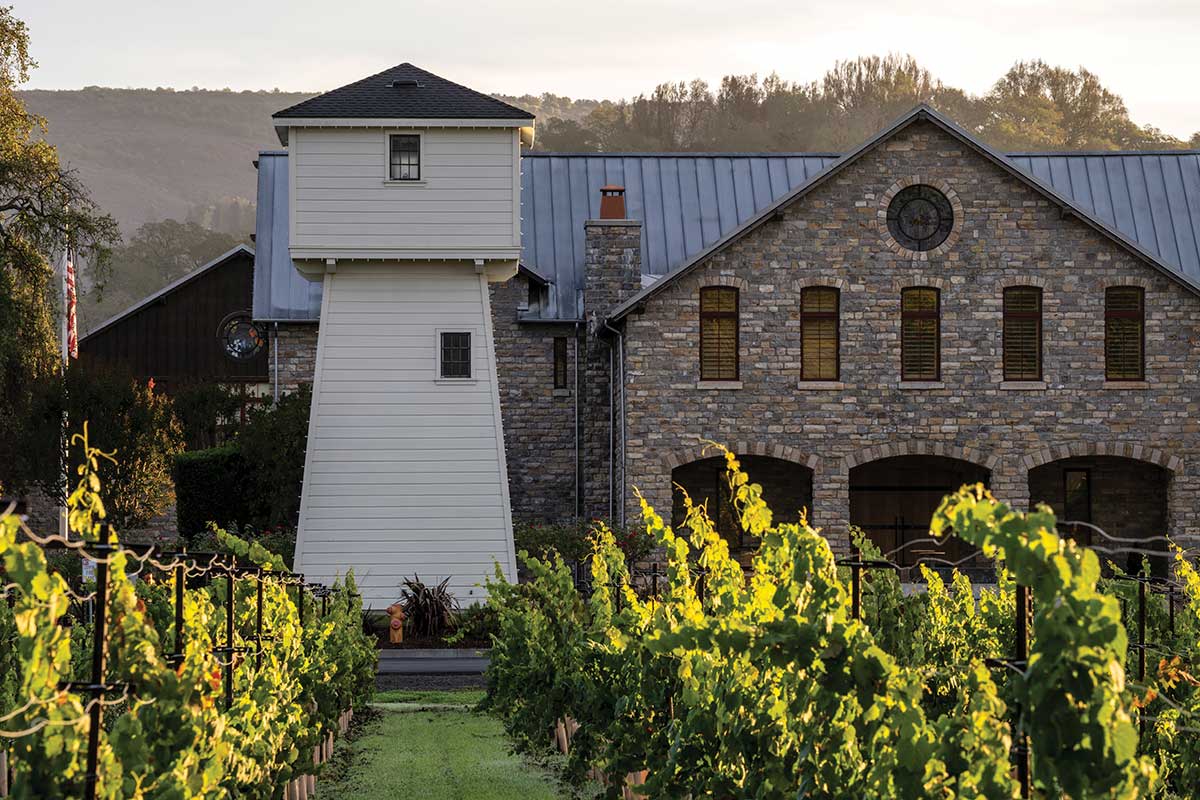
Silver Oak Napa Valley in Oakville courtesy of Silver Oak
Wineries to Know
Robert Mondavi Winery: A Napa Pioneer
Founded in 1966, Robert Mondavi Winery is more than just a historic estate—it’s the birthplace of modern Napa Valley. With his namesake winery located in the heart of Oakville—currently undergoing a highly anticipated winery renovation—Mondavi elevated California wine onto the global stage. His development of Fumé Blanc and commitment to vineyard-designate Cabernet Sauvignon, particularly from the famed To Kalon Vineyard, set a benchmark for quality that still guides the region today.
Opus One: A Global Vision Realized in Oakville
Founded as a groundbreaking partnership between Robert Mondavi and Baron Philippe de Rothschild, Opus One seamlessly blends Bordeaux tradition with the unique expression of Napa Valley. Its elegant Cabernet and architecturally striking estate have made it a symbol of international luxury. With each vintage, Opus One affirms Oakville’s place on the world stage of fine wine.
Far Niente: A Legacy Reclaimed
Originally built in 1885, the historic Far Niente was resurrected in the late 1970s and quickly became one of Oakville’s crown jewels. The stunning stone winery, nestled at the base of the Mayacamas Mountains, crafts wines of richness and finesse. Known for its estate-grown Cabernet Sauvignon and Chardonnay, Far Niente strikes a balance between historical reverence and modern precision, producing wines that are both luxurious and age-worthy.
Heitz Cellar: The Vineyard That Changed Everything
While Heitz Cellar is based in St. Helena, its legendary Martha’s Vineyard lies squarely in Oakville—and it’s one of the most influential single-vineyard wines in Napa history. Since its first vintage in 1966, Martha’s Vineyard has showcased a distinctive, minty eucalyptus signature that has become iconic. “Our mission is to continue producing this Cabernet Sauvignon in its timeless, age-worthy style and share our passion for producing this wine with guests and collectors,” says Sherwood. This vineyard helped solidify the concept of terroir-driven Cabernet in California and remains a benchmark for the varietal.
Silver Oak: The Taste of Tradition
Since 1972, Silver Oak has been synonymous with American oak-aged Cabernet Sauvignon. Its Oakville estate is not only a visual stunner—with LEED-certified architecture and sustainable farming—but also a leader in accessible, age-worthy wines that resonate with collectors and casual drinkers alike. Silver Oak’s commitment to consistency and hospitality makes it a must-visit for anyone exploring Oakville’s wine culture.
A Region that Defines Napa
Oakville is a measuring stick by which all other Napa Cabernet is judged. Its wines are rich but refined, structured yet seductive. Here, legacy and innovation coexist, and vineyard blocks carry global reputations. As Silacci puts it, “We are all proud of the leading wineries in the AVA. They lift us all to greater heights.” Whether you’re a collector chasing cult Cabernets or a traveler seeking unforgettable wine country experiences, Oakville offers a window into the soul of Napa Valley.